Business Name: BeeHive Homes of Crownridge Assisted Living
Address: 6919 Camp Bullis Rd, San Antonio, TX 78256
Phone: (210) 874-5996
BeeHive Homes of Crownridge Assisted Living
We are a small, 16 bed, assisted living home. We are committed to helping our residents thrive in a caring, happy environment.
6919 Camp Bullis Rd, San Antonio, TX 78256
Business Hours
Monday thru Saturday: 9:00am to 5:00pm
Facebook: https://www.facebook.com/sweethoneybees
Instagram: https://www.instagram.com/sweethoneybees19/
When a moms and dad begins to forget names, miss appointments, or repeat inquiries, households commonly float in between rejection and panic. Most grown-up kids begin by filling up the spaces themselves. We classify drug packs, include a door chime, hide the cars and truck keys for "fixings." That can work for a while. Then the spaces expand. Cooking becomes risky, nights extend long, and your moms and dad, when thorough, starts to really feel lost in acquainted areas. This is the factor where Memory Care quits being an abstract concept and develops into a functional path toward safety and security, self-respect, and relief.
The phrase "memory look after parents" covers a spectrum: from specialized wings in Assisted Living areas to specialized Memory Care houses with safe and secure layouts. These programs are developed for individuals living with Alzheimer's disease, vascular dementia, Lewy body illness, and other problems that impair memory and reasoning. Succeeded, Memory Treatment gives framework without removing freedom, and companionship without surrounding. I have seen family members stumble right into it hesitantly just to take a breath out days later, amazed at how promptly an enjoyed one's state of mind steadies when their setting finally matches what their brain can handle.
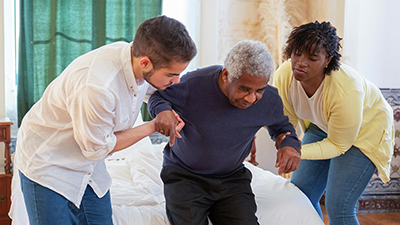
What makes Memory Care various from basic elderly care
Senior Care extends whatever from independent living to knowledgeable nursing. Memory Care rests inside that continuum yet operates by its very own playbook. In the beginning look, a Memory Care community may resemble a smaller sized, cozier Assisted Living floor. The differences arise in the details that carry through the day: lights, color contrast, meal timing, task sequencing, and team training tailored for cognitive changes.
There is a style reasoning below. Amnesia multiplies complication triggered by intricacy. A hallway lined with identical doors comes to be a maze unless each room has an unique visual hint. Kitchens that keep knives and cleaning items noticeable are a threat. Outdoor courtyards require looped paths with a single departure to avoid bottlenecks and panic. Many Memory Care devices make use of protected perimeters, camouflaged departure doors, and activity sensing units that notify team prior to somebody wanders right into danger.
Care strategies likewise diverge. In common Assisted Living, the emphasis might be drug support, showering assistance, and transport. In Memory Treatment, behavioral patterns stand center stage. Personnel log frustration causes, time of sundowning, hunger fluctuations, and responsiveness to signs. Bathing could be transferred to the morning if mid-days consistently bring resistance. Tasks are gotten into brief, success-focused segments instead of lengthy blocks that overwhelm. And when a resident stands up to treatment, the response is not to push more difficult however to step back, reframe the request, and attempt again in a few mins with a various approach.
The day-to-day rhythm that steadies the mind
People living with dementia live closer to the moment than the schedule. They count greatly on regimen. A solid Memory Treatment program makes every day predictable. That does not mean stiff. It implies acquainted patterns, mild shifts, and environmental cues that reduce the cognitive lots of decision-making.
In a well-run area, mornings start with bright, indirect light and positive signs: soft songs around 8 a.m., fresh coffee aromas wafting from the dining-room, a grinning aide welcoming each local by name. Breakfast is not just food, it is securing. You see cereals in clear containers, not hidden in boxes, and plates that comparison with tablecloths so eggs do not aesthetically blend right into white porcelain. That comparison seems insignificant till you view a resident eat better simply since they can see their food clearly.
Mid-morning could bring chair yoga, a short stroll, or hand massage therapy. The goal is never to complete a task yet to engage senses. Art jobs highlight structures and shades instead of elaborate instructions. Also folding towels is deliberate job. I have actually seen a retired teacher with mid-stage Alzheimer's brighten when asked to "help organize the classroom," a simple shelf-straightening job framed in her long-lasting language.
The afternoon rate reduces. If somebody is vulnerable to straying after lunch, personnel steer them to the garden. Hydration stations sit in plain view. Team do not ask, "Are you thirsty?" They offer a glass and consume alcohol a sip themselves initially. Modeling jobs better than convincing. Supper happens earlier than in regular Assisted Living. Evening routines begin prior to exhaustion embed in, lights lower slowly, and the soundtrack moves to calm instrumentals. This tempo reduces the possibility of the agitated, upset evenings that use families down at home.
Training that adjustments outcomes
I have actually visited communities where the structure looks best theoretically however the care feels off. The difference is generally staff training and culture. Excellent Memory Treatment teaches employees to see behavior as interaction. A resident screaming throughout a shower is not "noncompliant," they are chilly, scared, or bewildered by noise. The staffer trained in dementia care knows to warm up the shower room, hand the towel to the citizen initially for control, tell each action in brief expressions, and maintain water off the face unless the person is comfortable.
Communication comes to be an art. Personnel discover to approach from the front, make eye get in touch with, and utilize names you actually make use of in your home. They rely on prompts and choices with 2 alternatives, not open-ended inquiries that incapacitate. "Would certainly you such as heaven coat or the eco-friendly one?" jobs better than "What do you want to use?" This method humanizes treatment instead of infantilizing it.
Medication monitoring also looks different. Some Memory Care programs construct solid relationships with geriatricians and pharmacists who concentrate on psychotropics. The group fulfills regularly to assess dosages, side effects, and behavior ideas. The very best programs are sluggish to include sedatives and quick to adjust environments. If a resident starts to pace, the thoughtful service could be a strolling buddy and a late treat instead of a pill.
Nutrition, hydration, and the little wins at the table
Weight loss sneaks up in dementia. Individuals forget to eat, can not browse utensils, or simply do not register hunger. Memory Treatment kitchen areas adapt. You see finger foods that maintain dignity for those who can not take care of cutlery, fortified smoothies that load calories and healthy protein, and adaptable food selections with cultural favorites. I keep in mind a resident whose intake increased when the chef began serving warm tortillas and tiny mugs of bean soup at lunch. Preference memory can last longer than various other memory. Dishes that evoke home lug emotional power.
Hydration takes method. Mugs with covers lower spills and stress and anxiety. Drinks can be found in small portions provided typically. Staff do not nag; they sign up with homeowners in a sip. Flavorful waters and fruit popsicles push consumption without turning it right into a struggle. These little success add up. A five-pound weight gain in a month can be the difference between maintaining wheelchair and sliding into weakness.
Safety without sacrificing freedom
Families are afraid locks, alarm systems, and the concept of "being caught." That fear is valid. There are poor executions of secured treatment. High quality Memory Treatment balances safety and security with flexibility. The very best designs shield the border while creating big, open indoor rooms, including outdoor yards, where citizens can wander. Doors mix into design so they are less of a magnet. Pacing courses loop back to a central lounge as opposed to dead-ending at a wall.

Inside homes, security is layered. Water temperature level controls prevent hot. Appliances are either eliminated or changed. Some neighborhoods set clever sensing units that alert team if a resident gets out of bed at 2 a.m. and does not return in a couple of minutes. The purpose is to intervene prior to a fall, not to surveil for the sake of it. When personnel react well, citizens work out quicker and households stop sleeping with their phone under the pillow.
The role of deliberate activity
Activity calendars can look hectic yet still misunderstand. In Memory Treatment, objective outweighs novelty. You are not attempting to captivate, you are attempting to connect. Familiar tasks from a person's past work well: brightening silver for a person that ran a home with satisfaction, sorting equipment for a retired technician, setting out hymnals for a choir participant. Music is effective. Individuals who no longer talk in sentences can sing whole knowledgeables. Place on a huge band playlist and watch posture straighten out, feet tap, and eyes brighten.
Therapeutic techniques such as Montessori-based tasks for mental deterioration and validation therapy are not tricks. Montessori concentrates on hands-on jobs with clear actions and prompt success, which reduces frustration. Validation therapy satisfies a person in their regarded reality rather than correcting it. If a resident requests a long-deceased partner, personnel may inquire about their wedding day rather than urge "He passed years ago." This lowers distress and builds trust. Art and pet dog therapy can open doors words no longer do.
Family, regret, and remaining part of the team
If you are checking out assisted living for a moms and dad, you are likely additionally wrestling with shame. Several grown-up children hang on in your home out of loyalty or a guarantee made years earlier. A promise makes good sense when memory and mobility are undamaged. Dementia alters the mathematics. Safety requires widen, and the treatment ends up being a 24-hour work that no single person can do well alone.
Good Memory Care programs welcome family members as companions. They ask for life tales, favored routines, and the little information that soothe or pleasure. Bring a covering that scents like home, tag cabinets with pictures, and share the label your father in fact reacts to. Keep seeing, not just at vacations. Drop in at various times of day to see how the setting feels. Sit with your parent throughout a task, then step back and view just how staff involve them without you. Gradually, you ought to see less frantic telephone call and more normal updates: a picture of father smiling over pancakes, a note that mom liked the garden club.
When Memory Care makes the most significant difference
Memory Treatment is not a cure. It is a toolkit and a community designed for an altering mind. A number of circumstances reveal the most remarkable gains:
- Middle-stage mental deterioration with growing safety dangers: wandering, kitchen area problems, missed out on medications, and evening anxiety that leaves every person exhausted. Recurrent hospital stays from drops, urinary tract infections, or dehydration that could be prevented with structure and monitoring. Care partner fatigue where the spouse or adult kid is physically risk-free but emotionally at the snapping point, typically oversleeping two-hour ruptureds and residing on alert. Social isolation after close friends stop going to and the moms and dad sheds the ability to plan or initiate tasks on their own. Complex actions such as deceptions or sundowning that respond to routine, customized communication, and ecological tweaks more than to medication.
In each of these, the ideal environment enhances lifestyle not just for the person with mental deterioration however, for the entire family.
Cost, value, and the often-missed expenditure of burnout
Memory Treatment is expensive. Regional averages vary extensively, from about $4,000 to $9,000 monthly, often more in high-cost city areas. That sticker shock needs context. In the house, households spot together paid caretakers, adult day programs, meal distribution, incontinence supplies, transportation, and the covert price of lost earnings. Include the cost of safety and security improvements and the risk of health center remains from avoidable concerns. When you tally it honestly, Memory Care is not always a lot more pricey. It is commonly a lot more predictable.
Financial planning issues. Experts' benefits, long-term care insurance coverage, and Medicaid waivers can balance out prices in some states. Ask neighborhoods to be transparent concerning price structures. Some bill a base price plus treatment levels that increase with demands. Others offer all-inclusive packages. Ask what happens if cash runs out. Do they participate in Medicaid after a private-pay period? You desire clearness prior to you move in, not a shock notice months later.
The move itself: just how to make it gentler
Moves are hard, and mental deterioration intensifies changes. Start the procedure prior to a dilemma if you can. Excursion at various times, speak to personnel not simply marketing, and ask to observe an activity silently. Households usually pick the community that really felt best to the person during a brief go to, but a tranquil scenic tour at 10 a.m. can mask a chaotic 5 p.m. routine. Seek consistency.
On move-in day, maintain the environment simple. Establish the home in advance with acquainted bed linens, pictures, and a few preferred things. Prevent filling up the room with too many souvenirs simultaneously. A quieter environment aids the mind map a brand-new area. Show up mid-morning when staff have time to invite. Keep long enough to see your moms and dad resolve into lunch, then leave on a positive note also if it moves you. Expect some turbulence in the very first two weeks. Routines take time to gel. Procedure development in little steps: fewer nervous telephone calls, a far better cravings, a nap after lunch.
Questions that expose just how a program really works
Here is a succinct checklist you can offer scenic tours to puncture the gloss:
- How do you embellish daily routines for each citizen, and can you share examples? What dementia-specific training do staff obtain at first and every year, and that gives it? How do you handle behaviors like departure seeking, sundowning, or rejection of care without excessive using sedatives? What is your staff-to-resident proportion by shift, consisting of evenings and weekend breaks, and how usually do you use company staff? Can I see this afternoon's task, and may I observe quietly for fifteen minutes?
The answers matter as high as the tone. You desire positive specifics, not unclear assurances.
How Memory Treatment supports clinical demands without overmedicalizing life
Memory Treatment sits between Assisted Living and nursing homes. Several locals have persistent conditions that need surveillance yet not continuous skilled nursing. The pleasant area consists of diabetes mellitus management, high blood pressure, COPD, and flexibility limitations. Communities coordinate seeing medical professionals, foot doctors, and therapists. The trick is connection. If you hear "We call 911 for most concerns," that is a warning. If you listen to "We have standing orders for usual issues, we track vitals when actions modifications, and we loophole in the health care medical professional quickly," you are in more secure territory.
Falls are a fact. Threat can not be removed unless you immobilize a person, which would deteriorate lifestyle. Great programs stop where possible and react fast when needed. They educate staff to check orthostatic high blood pressure, examine for pain after a case, and expect delayed signs of injury. They additionally look upstream. A resident that begins falling might require a drug testimonial, much better footwear, or a vision check, not a wheelchair.
The emotional arc for families
Most households do not feel prepared, then later wish they had moved earlier. The initial weeks frequently bring mixed emotions: alleviation that evenings are calmer, despair for the loss of the family members home, and a fresh layer of sense of guilt because, practically talking, life gets easier. That last piece surprises people and can feel disloyal. It is not. When you are no more the primary caregiver, you can be the child or son once again. That permits far better brows through, more persistence, and sweeter moments.
I think about a son who spent a year at home with his mommy, sleeping on the sofa outside her room door. After moving her into Memory Care, he kept going to every night. Instead of working out showers and medicines, he rested with her over tea. She hummed along to Sinatra; he informed her stories from his day. He began to laugh once more. She did as well. Their partnership did not finish when the treatment shifted. It ultimately had room to breathe.
Assisted Living vs. committed Memory Care units
Many Aided Living communities provide "protected memory assistance." Some do it exceptionally well, specifically those with smaller, homelike communities and solid team retention. Others just secure a wing without changing the treatment version. Committed Memory Care areas normally spend more deeply in training, layout, and staffing patterns, which can be important for mid- to later-stage dementia.
Your parent's phase and profile ought to drive the selection. If they are early phase, physically independent, and desire social life, a traditional Assisted Living with solid cognitive support courses can function. If they are prone to roaming, have hallucinations, or show considerable judgment modifications, a Memory Treatment unit is safer. Neighborhoods that use a school continuum allow you change smoothly as requirements evolve. That continuity decreases interruption, a considerable benefit.
Measuring lifestyle past the brochure
Quality of life is not a motto. You can see it if you recognize where to look. View citizens' faces in the hallway. Do they look engaged or parked? Listen throughout dishes. Is there conversation or only smashing? Observe personnel interactions. Do they make use of names, kneel to eye degree, and await answers? Glimpse right into a quiet corner mid-afternoon. Is a person softly checking out with a local who likes calmness instead of confining them right into a loud game?
Data factors assist as well. Ask about hospital transfer rates, ordinary weight security across citizens, team turnover, and family complete satisfaction surveys. No program is ideal. You are searching for a pattern of focus and responsiveness. Facilities with stable management and low turn over generally provide steadier care. High company staffing, particularly on evenings, typically associates with hurried, impersonal care.
What to do today if you are not ready to relocate yet
Some family members wish to develop capacity in the house for a little bit longer. That can be sensible if safety is workable. Borrow from Memory Care playbooks. Create a straightforward day-to-day routine published in the cooking area. Minimize visual mess. Use contrasting plates and flatware. Lock away risks. Install motion-activated night lights. Place favorite music on at specific times. Schedule adult day programs two times a week to give your moms and dad framework and you remainder. Interview home care firms that educate aides in mental deterioration, not just individual care. If your moms and dad stands up to helpers, present them as "buddies from church" or "the home food preparation club" if that lines up with your moms and dad's life tale. Language matters.
Keep a log of altering habits, hunger, sleep, and causes. When the log shows consistent erosion regardless of your efforts, deal with that as data as opposed to failure. It implies the environment needs to change, not that you did something wrong.
The human core of Memory Care
Memory Care is successful when it deals with the person as more than a medical diagnosis. Your mother is not "a sundowner," she is a retired nurse who liked lavender, done not like loud areas, and cooked Sunday suppers for a group. Your daddy is not "departure looking for," he is a previous mail carrier whose legs remember routes also when words falter. The most effective programs request for those information and weave them into treatment. A lavender-scented cold cream prior to bed. An early morning walking circuit mounted as "assisting with elderly care deliveries." Little, personal touches transform compliance right into cooperation and complication right into calm.
When family members ask me whether Memory Care really enhances quality of life, I think of those average wins. A spouse who sleeps with the evening for the very first time in months. A little girl that no longer fears food preparation due to the fact that her father is secure. A resident who hums along to a preferred song, fork in hand, eating a passionate lunch. None of these minutes would make a shiny brochure heading, yet they are the distinction in between surviving the day and living it.
If you are taking into consideration assisted living for a moms and dad and asking yourself where Memory Care fits, start with truthful monitoring. Take a look at the patterns, not the exemptions. Browse through neighborhoods with your eyes tuned to the small interactions. Ask difficult questions with generosity. And bear in mind that picking Memory Treatment is not a surrender. It is an act of adjustment, a way to match care to the individual your moms and dad is today. When setting and needs line up, quality of life does not just hold constant. It frequently lifts, carefully and reliably, in ways you will feel each time you go through the door.
BeeHive Homes of Crownridge Assisted Living has license number of 307787
BeeHive Homes of Crownridge Assisted Living is located at 6919 Camp Bullis Road, San Antonio, TX 78256
BeeHive Homes of Crownridge Assisted Living has capacity of 16 residents
BeeHive Homes of Crownridge Assisted Living offers private rooms
BeeHive Homes of Crownridge Assisted Living includes private bathrooms with ADA-compliant showers
BeeHive Homes of Crownridge Assisted Living provides 24/7 caregiver support
BeeHive Homes of Crownridge Assisted Living provides medication management
BeeHive Homes of Crownridge Assisted Living serves home-cooked meals daily
BeeHive Homes of Crownridge Assisted Living offers housekeeping services
BeeHive Homes of Crownridge Assisted Living offers laundry services
BeeHive Homes of Crownridge Assisted Living provides life-enrichment activities
BeeHive Homes of Crownridge Assisted Living is described as a homelike residential environment
BeeHive Homes of Crownridge Assisted Living supports seniors seeking independence
BeeHive Homes of Crownridge Assisted Living accommodates residents with early memory-loss needs
BeeHive Homes of Crownridge Assisted Living does not use a locked-facility memory-care model
BeeHive Homes of Crownridge Assisted Living partners with Senior Care Associates for veteran benefit assistance
BeeHive Homes of Crownridge Assisted Living provides a calming and consistent environment
BeeHive Homes of Crownridge Assisted Living serves the communities of Crownridge, Leon Springs, Fair Oaks Ranch, Dominion, Boerne, Helotes, Shavano Park, and Stone Oak
BeeHive Homes of Crownridge Assisted Living is described by families as feeling like home
BeeHive Homes of Crownridge Assisted Living offers all-inclusive pricing with no hidden fees
BeeHive Homes of Crownridge Assisted Living has a phone number of (210) 874-5996
BeeHive Homes of Crownridge Assisted Living has an address of 6919 Camp Bullis Rd, San Antonio, TX 78256
BeeHive Homes of Crownridge Assisted Living has a website https://beehivehomes.com/locations/san-antonio/
BeeHive Homes of Crownridge Assisted Living has Google Maps listing https://maps.app.goo.gl/YBAZ5KBQHmGznG5E6
BeeHive Homes of Crownridge Assisted Living has Facebook page https://www.facebook.com/sweethoneybees
BeeHive Homes of Crownridge Assisted Living has Instagram https://www.instagram.com/sweethoneybees19
BeeHive Homes of Crownridge Assisted Living won Top Assisted Living Homes 2025
BeeHive Homes of Crownridge Assisted Living earned Best Customer Service Award 2024
BeeHive Homes of Crownridge Assisted Living placed 1st for Senior Living Communities 2025
People Also Ask about BeeHive Homes of Crownridge Assisted Living
What is BeeHive Homes of Crownridge Assisted Living monthly room rate?
Our monthly rate depends on the level of care your loved one needs. We begin by meeting with each prospective resident and their family to ensure we’re a good fit. If we believe we can meet their needs, our nurse completes a full head-to-toe assessment and develops a personalized care plan. The current monthly rate for room, meals, and basic care is $5,900. For those needing a higher level of care, including memory support, the monthly rate is $6,500. There are no hidden costs or surprise fees. What you see is what you pay.
Can residents stay in BeeHive Homes of Crownridge Assisted Living until the end of their life?
Usually yes. There are exceptions such as when there are safety issues with the resident or they need 24 hour skilled nursing services.
Does BeeHive Homes of Crownridge Assisted Living have a nurse on staff?
Yes. Our nurse is on-site as often as is needed and is available 24/7.
What are BeeHive Homes of Crownridge Assisted Living visiting hours?
Normal visiting hours are from 10am to 7pm. These hours can be adjusted to accommodate the needs of our residents and their immediate families.
Do we have couple’s rooms available?
At BeeHive Homes of Crownridge Assisted Living, all of our rooms are only licensed for single occupancy but we are able to offer adjacent rooms for couples when available. Please call to inquire about availability.
What is the State Long-term Care Ombudsman Program?
A long-term care ombudsman helps residents of a nursing facility and residents of an assisted living facility resolve complaints. Help provided by an ombudsman is confidential and free of charge. To speak with an ombudsman, a person may call the local Area Agency on Aging of Bexar County at 1-210-362-5236 or Statewide at the toll-free number 1-800-252-2412. You can also visit online at https://apps.hhs.texas.gov/news_info/ombudsman.
Are all residents from San Antonio?
BeeHive Homes of Crownridge Assisted Living provides options for aging seniors and peace of mind for their families in the San Antonio area and its neighboring cities and towns. Our senior care home is located in the beautiful Texas Hill Country community of Crownridge in Northwest San Antonio, offering caring, comfortable and convenient assisted living solutions for the area. Residents come from a variety of locales in and around San Antonio, including those interested in Leon Springs Assisted Living, Fair Oaks Ranch Assisted Living, Helotes Assisted Living, Shavano Park Assisted Living, The Dominion Assisted Living, Boerne Assisted Living, and Stone Oaks Assisted Living.
Where is BeeHive Homes of Crownridge Assisted Living located?
BeeHive Homes of Crownridge Assisted Living is conveniently located at 6919 Camp Bullis Rd, San Antonio, TX 78256. You can easily find directions on Google Maps or call at (210) 874-5996 Monday through Sunday 9am to 5pm.
How can I contact BeeHive Homes of Crownridge Assisted Living?
You can contact BeeHive Homes of Crownridge Assisted Living by phone at: (210) 874-5996, visit their website at https://beehivehomes.com/locations/san-antonio, or connect on social media via Facebook or Instagram
Visiting the Friedrich Wilderness Park grants peace and fresh air making it a great nearby spot for elderly care residents of BeeHive Homes of Crownridge to enjoy gentle nature walks or quiet outdoor time