Business Name: BeeHive Homes of Crownridge Assisted Living
Address: 6919 Camp Bullis Rd, San Antonio, TX 78256
Phone: (210) 874-5996
BeeHive Homes of Crownridge Assisted Living
We are a small, 16 bed, assisted living home. We are committed to helping our residents thrive in a caring, happy environment.
6919 Camp Bullis Rd, San Antonio, TX 78256
Business Hours
Monday thru Saturday: 9:00am to 5:00pm
Facebook: https://www.facebook.com/sweethoneybees
Instagram: https://www.instagram.com/sweethoneybees19/
Families seldom start their look for assisted living from a calm, leisurely location. Regularly, it begins after a fall, a scare with roaming, a medical facility discharge, or a quiet awareness that a spouse or adult child is stressing out. The urgency, the paperwork, the unfamiliar lingo of senior care all accumulate until it feels easier to postpone a decision than make one.
In that noise, the quieter, smaller sized options are easy to ignore. Large, hotel-like homes market more heavily. Their sales brochures show grand lobbies and long lists of features. Yet lots of households who tour both types of settings feel an immediate, practically physical sense of relief when they step into a genuinely little, home-like assisted living environment.
They state things like, "It seems like my mother might breathe out here." Or, "My dad could in fact find the kitchen area and remember where his space is." That response is not sentimental. It shows really practical differences in how little assisted living houses manage elderly care, memory care, and respite care.
This article unloads those distinctions from a useful, lived-experience viewpoint, and discusses why "little" can be more than a choice. For some older grownups, it can form safety, dignity, and quality of life in ways that do not show up on a marketing flyer.
What "little assisted living" normally implies in practice
There is no universal legal definition of "small assisted living." Laws vary by state and country. Yet in daily senior care, people typically use the term to explain settings that:
- Serve a relatively low variety of residents, often in the variety of 4 to 20. Are physically similar to a house or little lodge rather than a big facility. Use shared living spaces that resemble a family home: a main cooking area, one dining location, and a common sitting room. Have a little, steady personnel that knows each resident personally.
That description covers a spectrum. At one end, you might discover a certified care home with six residents in a transformed single-family house. At the other, a little stand-alone building with 16 locals, constructed particularly for assisted living or memory care, however developed around a family design instead of an institution.
Families are typically surprised to discover that these locations can offer the very same fundamental services as a much larger campus: aid with bathing and dressing, medication management, meal preparation, house cleaning, and even structured activities. Some provide customized memory care within the exact same home-like setting. Others accept short-term respite care homeowners, enabling household caregivers to rest or travel.
The difference lies not simply in scale. It lies in how scale affects attention, environment, and everyday decisions.
Why size and environment matter for older adults
Older grownups, particularly those with cognitive modifications, live in a world where every transition is harder. Moving from a bedroom to a dining room, understanding a new day-to-day schedule, recognizing staff deals with, all of these can feel like demanding mental tasks.
In a big assisted living building, residents might need to navigate long corridors, numerous floorings, numerous dining locations, and regular personnel changes. For a healthy, extroverted senior, that can be promoting and satisfying. For someone who is frail, distressed, or living with dementia, it can be disorienting enough that they withdraw.
By contrast, a small, home-like setting offers:
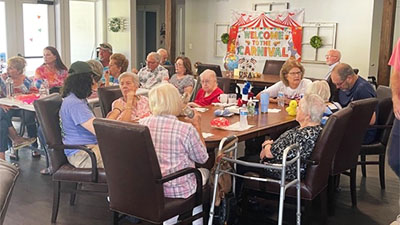
Fewer directions to remember. The bed room, bathroom, living room, and cooking area are generally clustered around a single hallway or shared area. Citizens rapidly construct a psychological map and gain self-confidence moving around.
More constant hints. The exact same table, the exact same chairs, the same couch, the exact same front door. This kind of repeating is comforting for numerous older adults, particularly those getting memory care.
Less sensory overload. No blasting tvs in every common space, no cafeteria-scale dining, no constant stream of strangers at the front desk. Relative typically comment that their relative appears calmer and less upset just since the environment is quieter and more predictable.
It is not that large houses are naturally bad. Some are beautifully run. Yet the "default" environment in a huge building tends to be more stimulating and more complex. The smaller sized home-like model shifts that baseline, so comfort and navigability come first.
Relationship-based care rather of task-based care
When I talk to staff from small assisted living homes, a pattern emerges in how they explain their work. They talk about people before they talk about jobs. They state, "Mr. Alvarez likes to eat later in the early morning," not, "We begin breakfast service at 7:30." That kind of language shows the core strength of small settings: relationship-based care.
In a little home:
Staff see the exact same residents all day. A caretaker who helps with morning care will typically also serve lunch, lead an easy activity, and respond to any afternoon requires. That connection builds trust. Citizens are less most likely to withstand bathing or medications when the person assisting them is not a stranger.
Changes are observed quickly. A subtle shift in gait, a brand-new cough, less appetite, or confusion that seems "off" from baseline, these information stand out when a caregiver sees the exact same ten homeowners every day. Early recognition typically prevents hospitalizations.
Family communication is more natural. When a daughter contacts us to ask, "How was Mom today?" she is most likely speaking with someone who personally saw her mother numerous times, not checking out from a chart. That makes updates more specific and meaningful.
Tasks still matter. Medications need to be provided properly. Showers must be documented. Yet in a smaller home, jobs are more quickly woven into the rhythm of a family day, rather than forcing the day to bend around the task schedule.
This relationship-centered technique ends up being particularly vital in dementia and memory care, where trust and predictability can dramatically minimize agitation and behavioral symptoms.
A home that feels lived in, not staged
Families often beehivehomes.com senior care see small, informing information when they tour a little assisted living home. A resident's knitting basket sits by their chair. Someone's preferred mug appears next to the sink. At 3:30 p.m., a team member is helping a resident stir cookie dough at the kitchen area counter.
None of these things are fancy. They do not look outstanding on a brochure. Yet they add to a sense that life is still unfolding, not just being observed.
Older grownups tend to gain from:
Shared rituals. Morning coffee in the same spot. The everyday mail arranged at the kitchen table. A particular time when somebody always checks whether you seem like opting for a walk. These repeatings create structure without seeming like institutional "shows."
Real jobs, not just activities. Folding towels, helping set the table, watering plants, or sorting buttons for somebody with innovative dementia, these small acts support self-respect and identity. They are easier to incorporate in a home-sized setting than in a big structure that separates "citizens" from "personnel work."
Informal visiting. In numerous little homes, the living-room is simply where life occurs. Citizens might watch a program together, chat, nap in armchairs, or listen to music without requiring to "participate in an activity." The space works like a household living-room, not an event venue.
For some families, especially those whose loved one previously resided in a modest home, this kind of credibility matters more than marble lobbies or official dining service. It signals that the objective is not to impress visitors, however to support citizens in manner ins which feel normal and familiar.
Small settings and memory care: a quieter, kinder stage
Specialized memory care within big structures typically sits on a separate locked floor or wing. Staff are trained in dementia care, and the environment might consist of roaming courses, memory boxes, and secure gardens. This model can work well for lots of people.
Yet for some people, specifically those in moderate to advanced stages, even a dedicated memory care unit in a big center seems like excessive: too many individuals, voices, doors, and shifts in a single day.
Small, home-like houses adjusted for memory care can alleviate that sense of overwhelm. The very same front door, the very same cooking area smells, the same handful of staff faces, these form a stable reference frame when short-term memory is unreliable.
From a scientific viewpoint, households and clinicians typically discover:
Fewer "bad days." There is no magic treatment for dementia, however a calmer environment and consistent regimens can decrease triggers that result in agitation, pacing, or outbursts.
Safer roaming. In a single-level, compact home with a protected lawn, a person can walk in loops without coming across stairs, elevators, or confusing crossways. Staff can keep a gentle eye on them without consistent redirection.
More tailored hints. Labels on doors, use of familiar household items, and memory triggers can be customized. It is simpler to hang a resident's preferred quilt in a corridor or keep their radio with familiar music in a shared sitting area when scale is small.
Of course, little settings are not instantly much better for every person with dementia. Someone who is extremely social, accustomed to a bustling environment, and still enjoys large-group activities might grow more in a huge memory care neighborhood. Matching personality and preference still matters.
The quiet power of respite care in small homes
Respite care often gets treated as an afterthought in conversations about senior care. Families require a brief stay only when a caretaker crisis is imminent: a surgical treatment for the main caretaker, burnout, or a long-delayed trip that can not be held off further.
In a little assisted living home, respite care can be particularly important. A brief stay of a week or a month enables an older adult to evaluate the environment in a low-pressure way. For the household, it provides a window into how the residence genuinely operates once the tour is over.
When respite care happens in a small, stable family rather than a confidential guest space on a large school, several things tend to happen:
Adjustment is smoother. Newbies learn names and regimens quicker when there are fewer of both. That matters for those who feel distressed in unknown places.
Relationships start right away. Respite homeowners share meals, activities, and personnel with long-lasting residents. If they eventually move in permanently, they currently understand the rhythm of the home.
Caregivers' rest is much deeper. It is simpler for a partner or adult child to really rest when they have direct, particular communication with the same staff during respite. Numerous families use these short stays as trial runs for prospective long-term placements.
Thoughtful use of respite care, particularly when planned proactively rather than at the breaking point, can make the shift into longer-term assisted living less traumatic for everyone involved.
When "small" is not automatically better
It is important not to glamorize small assisted living. A relaxing environment does not guarantee qualified care. I have strolled into small homes that felt improperly handled, understaffed, or cluttered. A gorgeous approach on a site can not make up for lack of training, weak oversight, or financial instability.
Moreover, particular older adults genuinely prefer a larger, more resort-like setting. Some signs that a huge residence might fit better consist of:
A strong desire for variety. Elders who thrive on multiple restaurant options, frequent occasions, and large-group activities might feel bored in a little home with a quieter social scene.
Complex medical needs. While some little homes generate visiting nurses and therapists, a big continuing care school with on-site clinics may much better support extremely complex medical conditions.
Established pal groups. If a number of friends or relatives already live in a particular big community, the social benefit can exceed the drawbacks of scale.
Geography and cost also matter. In thick metropolitan locations, little care homes may be limited or concentrated in specific neighborhoods. Pricing can differ widely, in some cases higher and often lower than large centers, depending upon staffing designs and amenities.
The secret is not to assume that larger equates to much better, or that small equates to instantly more caring. The quality of elderly care constantly emerges from specific people, policies, and daily practices.
Key distinctions between small and big assisted living settings
Families often request a straightforward method to compare choices. The reality is intricate, however particular patterns appear frequently.
Here is a simple comparison that can guide your thinking:
- Environment: Little homes feel like a home with shared spaces, while big homes look like hotels or campuses with numerous wings and amenities. Relationships: Small settings typically offer richer one-to-one relationships with personnel and next-door neighbors, whereas big communities offer wider but in some cases more shallow social networks. Routines: Small homes tend to bend around individual routines, while large facilities should standardize more to manage lots of homeowners at once. Activities: Small residences favor casual, everyday activities, while bigger ones provide structured calendars with more formal events. Transparency: In a little home, it is harder for poor care to conceal, however likewise simpler to rely on a narrow management group. In a large neighborhood, more layers of management can function as checks, however can likewise distance decision-makers from residents.
This list is not outright. Exceptional big communities work hard to create household-like "areas" within larger buildings, and some small crowning achievement tightly arranged programs. Utilize the comparison as a beginning hypothesis, then check it versus what you see on the ground.
What to focus on when you tour a little residence
A polished tour can mask weak care. The reverse is likewise true: a modest, older building can hold a deeply caring, well-run community. Your task as a family member is not to be pleased, but to gather sufficient observations to choose whether the home fits your relative's requirements and personality.
Some of the most telling indications show up in small, unscripted minutes:
How personnel speak to citizens. Listen for tone as much as words. Do they utilize citizens' names? Do they crouch to eye level rather than speaking from throughout the room? Do they sound rushed, or engaged and patient?
Adult dignity. See how personnel help with individual care. Are doors closed throughout bathing and dressing? Are citizens covered properly when moved or transferred? Are discussions about toileting handled silently, not across the hallway?
Interruption handling. At some time throughout your visit, a resident will interrupt with a question or requirement. Observe how staff respond. Do they dismiss the individual, or acknowledge them and reroute respectfully?
Resident mood. You do not need everyone smiling. Some individuals deal with chronic pain or anxiety. Yet you ought to see at least a few locals engaged in conversation, enjoying something with moderate interest, or relaxed in common locations, not all separated in their rooms.
Family existence. Search for indications that relatives come and go comfortably. Pictures on walls, notes on bulletin boards, personal products in common locations, and personnel who greet going to household by name all suggest an open, inclusive approach.
If something concerns you, inquire about it directly. How they address typically informs you as much as the material of the answer.
Questions to ask when you tour a little residence
Having a brief, focused checklist can keep you grounded during an emotional visit. Consider asking:
- How numerous homeowners live here, and what is your typical staff-to-resident ratio on days, nights, and nights? How do you handle a resident whose needs increase, either physically or cognitively? Do you generate more assistance, or would they need to move? What training do caregivers receive, specifically around dementia, mobility assistance, and medication management? How do you involve households in care planning and updates, and who is our main point of contact? Can you describe a recent scenario when a resident had a medical or behavioral crisis, and how the staff responded?
Take notes right after the tour, while impressions are still fresh. If you feel hurried or brushed off when asking these questions, consider that an information point.
Integrating assisted living into the wider arc of elderly care
Choosing assisted living, whether small or large, is hardly ever a separated choice. It sits within a longer arc of elderly care that may consist of in-home support, adult day programs, respite care, healthcare facility stays, and potentially experienced nursing at some point.
Small assisted living homes can play several roles along this arc:
As a next action from home care. When the number of caregivers entering your house becomes uncontrollable, or when security becomes a concern, a relocation into a small home can preserve much of the sensation of "being at home" while including structure and oversight.
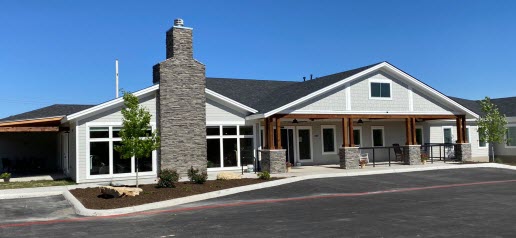
As a bridge between independent living and high-acuity care. For elders who no longer fit well in independent living but do not yet need a nursing facility, a small assisted living home uses more tailored support without jumping straight into an extremely medical setting.
As a long-lasting environment for those with advanced dementia. When coupled with thoughtful memory care, a small home can act as a stable, soothing setting even as cognitive decline progresses, reducing the requirement for disruptive moves.

Thinking about the entire trajectory assists you ask different questions. Instead of "Is this best permanently?", you might ask, "Can this home meet my relative's requirements for the next several years, and how do they deal with modifications?" That framing decides more manageable and less absolute.
Bringing it all together for your family
If you feel overwhelmed by the choices in senior care, you are not alone. The system is fragmented, terms differs, and emotional stakes are high. Amidst that complexity, little assisted living homes can look nearly too basic, particularly when compared to big neighborhoods with shiny marketing and long facility lists.
Yet simpleness is frequently exactly what an older adult requirements. A front door they acknowledge. A kitchen that smells like genuine cooking. Staff who know not simply their medical history, but how they take their tea and what stories they tell when they can not sleep.
The surprise benefits of little assisted living are not truly hidden at all. They emerge in the quiet, everyday interactions that form an individual's sense of safety, identity, and belonging. That is as real in memory care and respite care as it is in long-term assisted living.
As you weigh alternatives, offer these small, home-like houses a reasonable, unhurried appearance. Walk the length of the hallway. Sit for a few minutes in the typical room without talking. Watch how people walk around each other. Listen to the background sound and the quality of silence.
You are not only choosing a service. You are picking the texture of your relative's regular days. For many households, particularly when an older adult feels overwhelmed by change, a little assisted living home deals something both uncommon and deeply useful: care that feels less like a center and more like a home that has quietly reorganized itself to keep them safe.
BeeHive Homes of Crownridge Assisted Living has license number of 307787
BeeHive Homes of Crownridge Assisted Living is located at 6919 Camp Bullis Road, San Antonio, TX 78256
BeeHive Homes of Crownridge Assisted Living has capacity of 16 residents
BeeHive Homes of Crownridge Assisted Living offers private rooms
BeeHive Homes of Crownridge Assisted Living includes private bathrooms with ADA-compliant showers
BeeHive Homes of Crownridge Assisted Living provides 24/7 caregiver support
BeeHive Homes of Crownridge Assisted Living provides medication management
BeeHive Homes of Crownridge Assisted Living serves home-cooked meals daily
BeeHive Homes of Crownridge Assisted Living offers housekeeping services
BeeHive Homes of Crownridge Assisted Living offers laundry services
BeeHive Homes of Crownridge Assisted Living provides life-enrichment activities
BeeHive Homes of Crownridge Assisted Living is described as a homelike residential environment
BeeHive Homes of Crownridge Assisted Living supports seniors seeking independence
BeeHive Homes of Crownridge Assisted Living accommodates residents with early memory-loss needs
BeeHive Homes of Crownridge Assisted Living does not use a locked-facility memory-care model
BeeHive Homes of Crownridge Assisted Living partners with Senior Care Associates for veteran benefit assistance
BeeHive Homes of Crownridge Assisted Living provides a calming and consistent environment
BeeHive Homes of Crownridge Assisted Living serves the communities of Crownridge, Leon Springs, Fair Oaks Ranch, Dominion, Boerne, Helotes, Shavano Park, and Stone Oak
BeeHive Homes of Crownridge Assisted Living is described by families as feeling like home
BeeHive Homes of Crownridge Assisted Living offers all-inclusive pricing with no hidden fees
BeeHive Homes of Crownridge Assisted Living has a phone number of (210) 874-5996
BeeHive Homes of Crownridge Assisted Living has an address of 6919 Camp Bullis Rd, San Antonio, TX 78256
BeeHive Homes of Crownridge Assisted Living has a website https://beehivehomes.com/locations/san-antonio/
BeeHive Homes of Crownridge Assisted Living has Google Maps listing https://maps.app.goo.gl/YBAZ5KBQHmGznG5E6
BeeHive Homes of Crownridge Assisted Living has Facebook page https://www.facebook.com/sweethoneybees
BeeHive Homes of Crownridge Assisted Living has Instagram https://www.instagram.com/sweethoneybees19
BeeHive Homes of Crownridge Assisted Living won Top Assisted Living Homes 2025
BeeHive Homes of Crownridge Assisted Living earned Best Customer Service Award 2024
BeeHive Homes of Crownridge Assisted Living placed 1st for Senior Living Communities 2025
People Also Ask about BeeHive Homes of Crownridge Assisted Living
What is BeeHive Homes of Crownridge Assisted Living monthly room rate?
Our monthly rate depends on the level of care your loved one needs. We begin by meeting with each prospective resident and their family to ensure we’re a good fit. If we believe we can meet their needs, our nurse completes a full head-to-toe assessment and develops a personalized care plan. The current monthly rate for room, meals, and basic care is $5,900. For those needing a higher level of care, including memory support, the monthly rate is $6,500. There are no hidden costs or surprise fees. What you see is what you pay.
Can residents stay in BeeHive Homes of Crownridge Assisted Living until the end of their life?
Usually yes. There are exceptions such as when there are safety issues with the resident or they need 24 hour skilled nursing services.
Does BeeHive Homes of Crownridge Assisted Living have a nurse on staff?
Yes. Our nurse is on-site as often as is needed and is available 24/7.
What are BeeHive Homes of Crownridge Assisted Living visiting hours?
Normal visiting hours are from 10am to 7pm. These hours can be adjusted to accommodate the needs of our residents and their immediate families.
Do we have couple’s rooms available?
At BeeHive Homes of Crownridge Assisted Living, all of our rooms are only licensed for single occupancy but we are able to offer adjacent rooms for couples when available. Please call to inquire about availability.
What is the State Long-term Care Ombudsman Program?
A long-term care ombudsman helps residents of a nursing facility and residents of an assisted living facility resolve complaints. Help provided by an ombudsman is confidential and free of charge. To speak with an ombudsman, a person may call the local Area Agency on Aging of Bexar County at 1-210-362-5236 or Statewide at the toll-free number 1-800-252-2412. You can also visit online at https://apps.hhs.texas.gov/news_info/ombudsman.
Are all residents from San Antonio?
BeeHive Homes of Crownridge Assisted Living provides options for aging seniors and peace of mind for their families in the San Antonio area and its neighboring cities and towns. Our senior care home is located in the beautiful Texas Hill Country community of Crownridge in Northwest San Antonio, offering caring, comfortable and convenient assisted living solutions for the area. Residents come from a variety of locales in and around San Antonio, including those interested in Leon Springs Assisted Living, Fair Oaks Ranch Assisted Living, Helotes Assisted Living, Shavano Park Assisted Living, The Dominion Assisted Living, Boerne Assisted Living, and Stone Oaks Assisted Living.
Where is BeeHive Homes of Crownridge Assisted Living located?
BeeHive Homes of Crownridge Assisted Living is conveniently located at 6919 Camp Bullis Rd, San Antonio, TX 78256. You can easily find directions on Google Maps or call at (210) 874-5996 Monday through Sunday 9am to 5pm.
How can I contact BeeHive Homes of Crownridge Assisted Living?
You can contact BeeHive Homes of Crownridge Assisted Living by phone at: (210) 874-5996, visit their website at https://beehivehomes.com/locations/san-antonio, or connect on social media via Facebook or Instagram
Residents may take a nice evening stroll through La Villita Historic Village — a historic arts community in downtown San Antonio featuring art galleries, artisan shops, and restaurants.